Route 01
Buying a Pinball Machine
A pinball machine is the only collectible that is also an appliance, a piece of furniture and a 300-pound moving problem. Buy accordingly.
Decide the era before you decide the machine
Nearly every mistake first-time buyers make traces back to skipping this step. An electromechanical machine from the 1960s and a modern machine built last year are both "pinball," and almost nothing else about them is the same — not the maintenance, not the parts supply, not the failure modes, not the resale market.
Electromechanical machines have no computer at all. Scoring runs on stepper units, relays and score reels, and every fault is something physical you can see moving or failing to move. Parts are simple and often still available. Early solid state machines added circuit boards, which means battery corrosion becomes the single biggest threat to the machine's survival. Dot matrix era machines are the ones most people remember from arcades, have the deepest rulesets, and are the most sought-after tier. Modern machines are current production, come with a warranty, and depreciate like a new car for the first few years.
What to actually inspect
Ask the seller to have the machine switched on and playing before you arrive. A machine that "just needs a fuse" has never in the history of the hobby just needed a fuse.
- Playfield surface. Look across it at a low angle under a light. Swirls and dimples are normal use. Bare wood at ball-drop points, lifting inserts, and cracking along the grain are structural and expensive.
- Inserts. Run a fingertip across them. Anything sitting proud of the wood or sunk below it has moved, and moved inserts do not go back.
- Under the playfield. Lift it. You want a tidy harness and clean switch stacks, not melted insulation, snipped wires or a coil that smells burnt.
- Boards, on anything solid state. Look for a battery holder, and look for the green-white crust of alkaline corrosion around it. That is the difference between a repair and a rebuild.
- Backglass or translite. Flaking on silkscreened glass is common and hard to reverse. Check the bottom edge, where moisture collects.
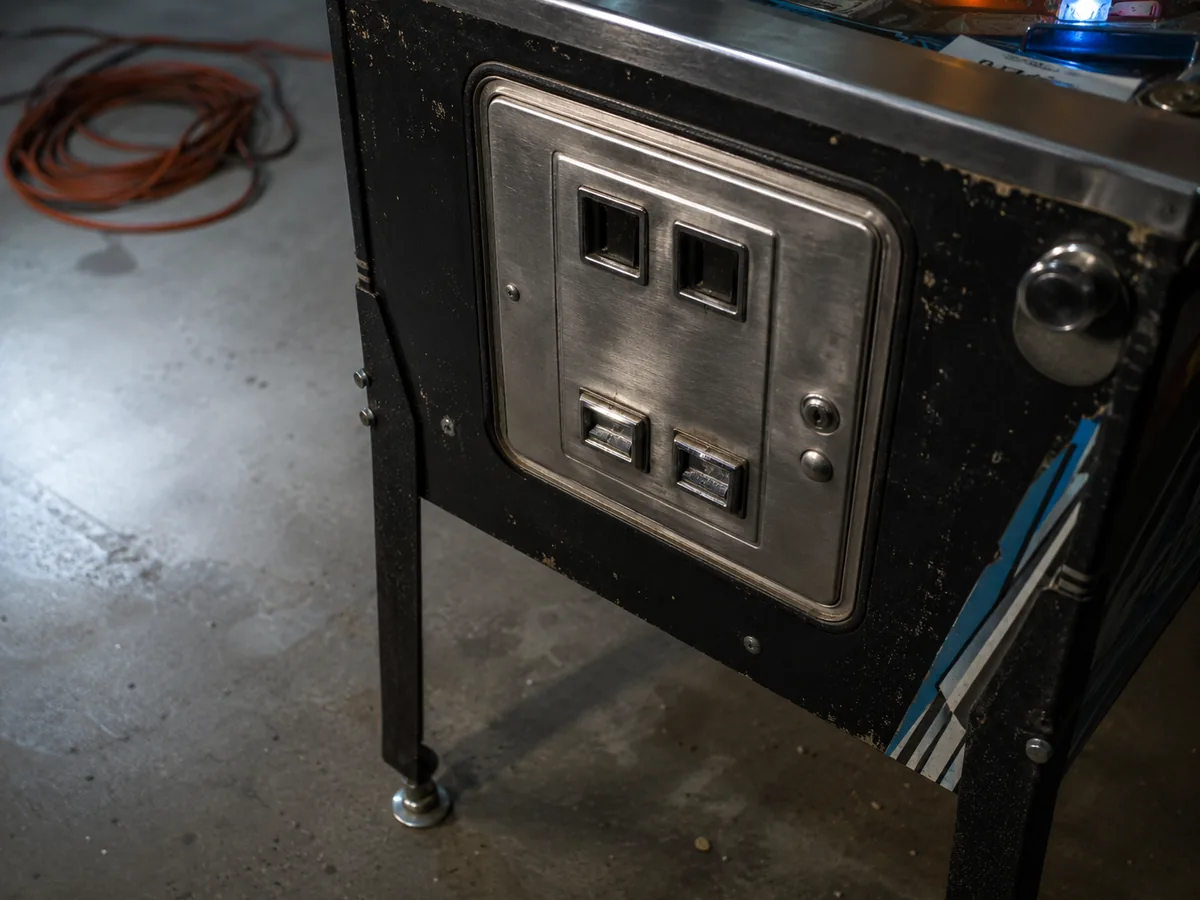
- Cabinet bottom. Machines get stored on damp concrete. Swollen, delaminating plywood at the base tells you where it has been living.
What it will cost you after the purchase
Budget for a shop-out on anything that has not had one: rubbers, bulbs, a full clean and wax, and usually a flipper rebuild. None of that is expensive individually. All of it together is a weekend and a parts order. Factor in transport as well — a machine two states away can add several hundred dollars in freight, and freight damage on pinball is common enough that many sellers will not ship at all.
Machines currently listed
Search live listings first to see what is out there, then switch to sold listings to see what people actually paid. Condition language in pinball listings is unregulated, so read the photographs, not the adjectives.
Links to eBay are affiliate links. If you buy through one we may earn a commission at no extra cost to you. It never changes what we tell you. Full disclosure.